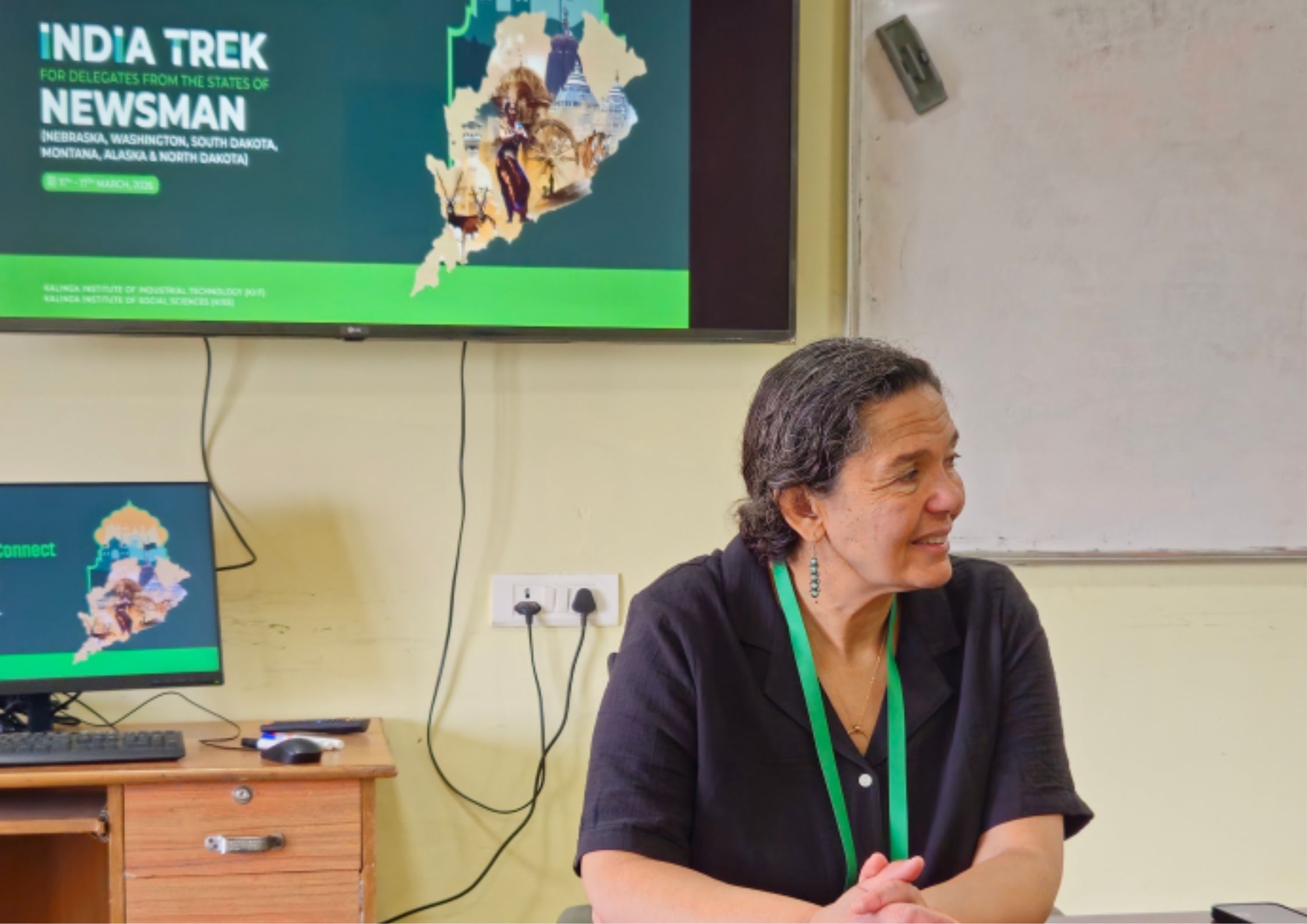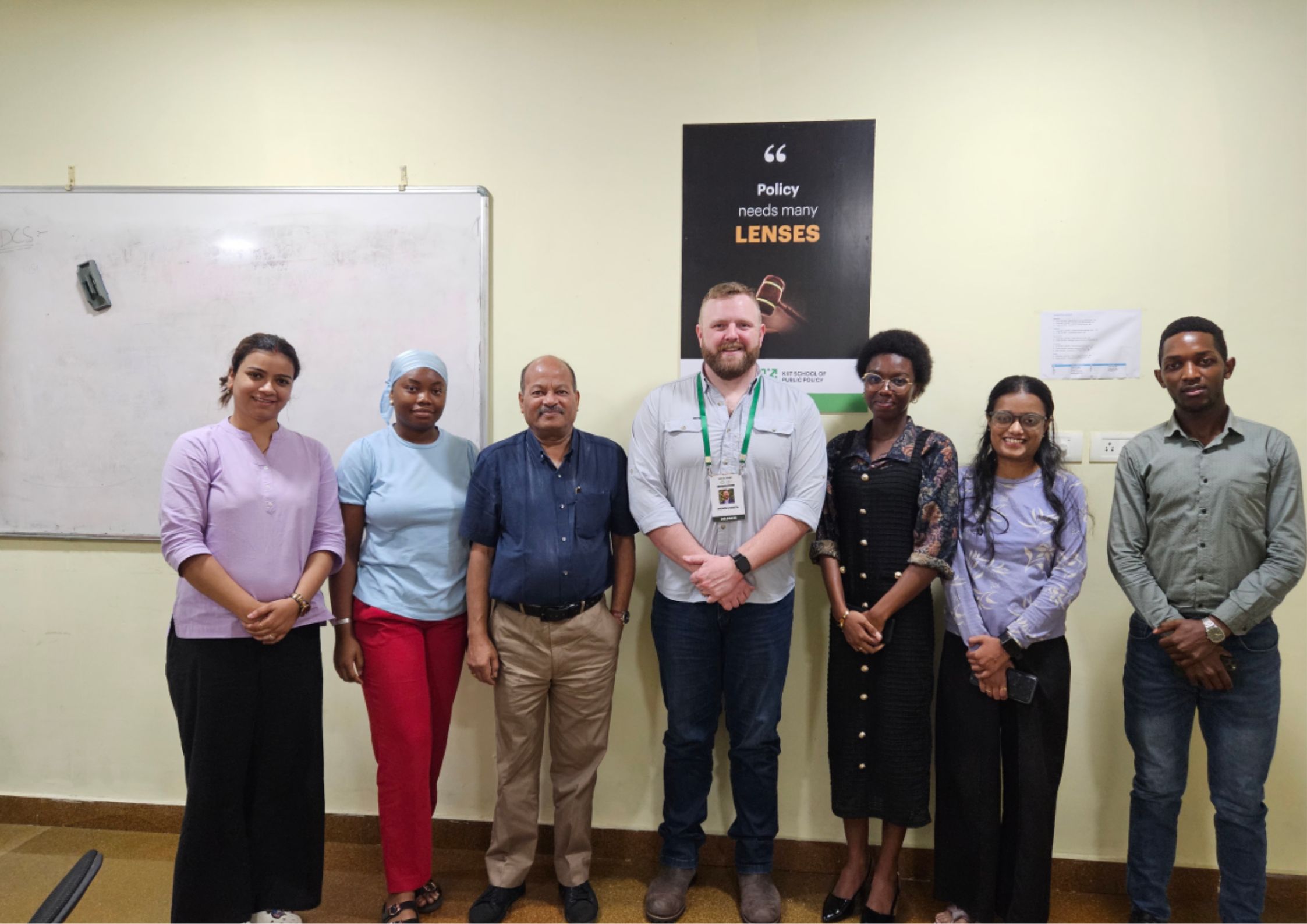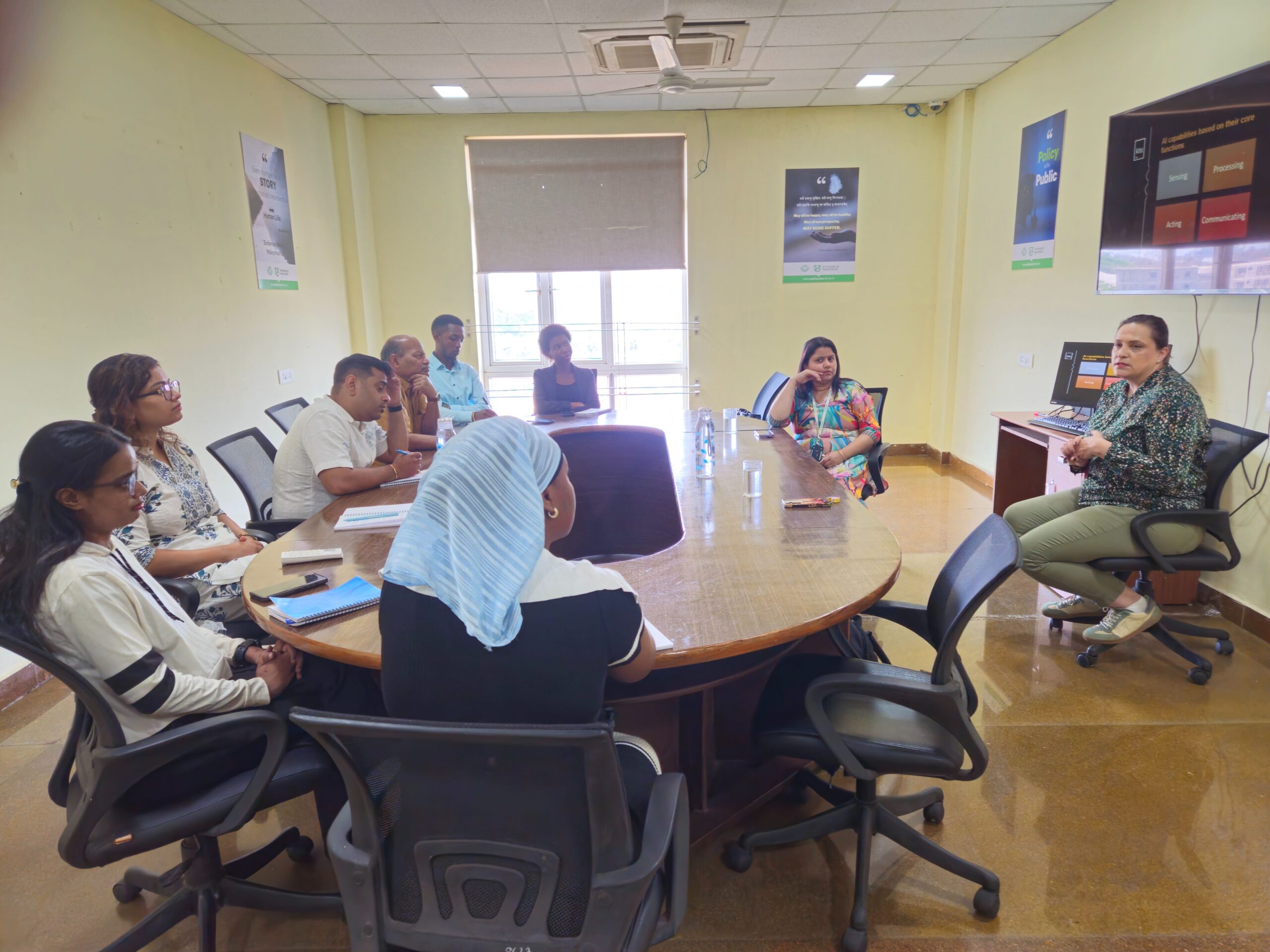
As part of the India Trek Program – KIIT Classroom Connect, the KIIT School of Public Policy hosted an interactive session with Ms. Deena Mansour, focusing on comparative political systems and contemporary governance challenges. The discussion provided students with an opportunity to examine the political structures of India and the United States and understand how different institutional arrangements influence democratic participation and policymaking.
A significant part of the session focused on the contrast between India’s multi-party political system and the predominantly two-party system of the United States. The discussion explored how these different structures shape electoral competition, political representation, voter choice, coalition-building, and the broader policymaking process. Students were encouraged to consider both the opportunities and limitations associated with each system and how political institutions develop within distinct historical and social contexts.
The session moved beyond institutional comparison to address contemporary issues affecting democratic governance. Political funding emerged as an important area of discussion, allowing students to examine the relationship between electoral processes, financial resources, political accountability, and transparency. These conversations encouraged a broader understanding of how democratic institutions function beyond their formal constitutional structures.
The interaction also extended to global governance challenges, enabling students to situate domestic political systems within an increasingly interconnected international environment. This added a wider comparative dimension to the classroom discussion and encouraged participants to examine how national institutions respond to evolving global concerns.
The session created a valuable platform for cross-cultural academic exchange and enabled students to engage with political systems from a comparative perspective. Through discussion and interaction, participants were encouraged to critically examine democratic structures, electoral choices, and governance challenges while appreciating the diverse institutional approaches adopted by different countries.